Shower Restoration Services
Shower Resealing Adelaide
Split, shrinking or detached seals can allow water to move through vulnerable junctions around a shower. STEGZ removes failed sealing material, carefully prepares the required surfaces and applies fresh sanitary silicone around the relevant perimeter, corners and screen joints.
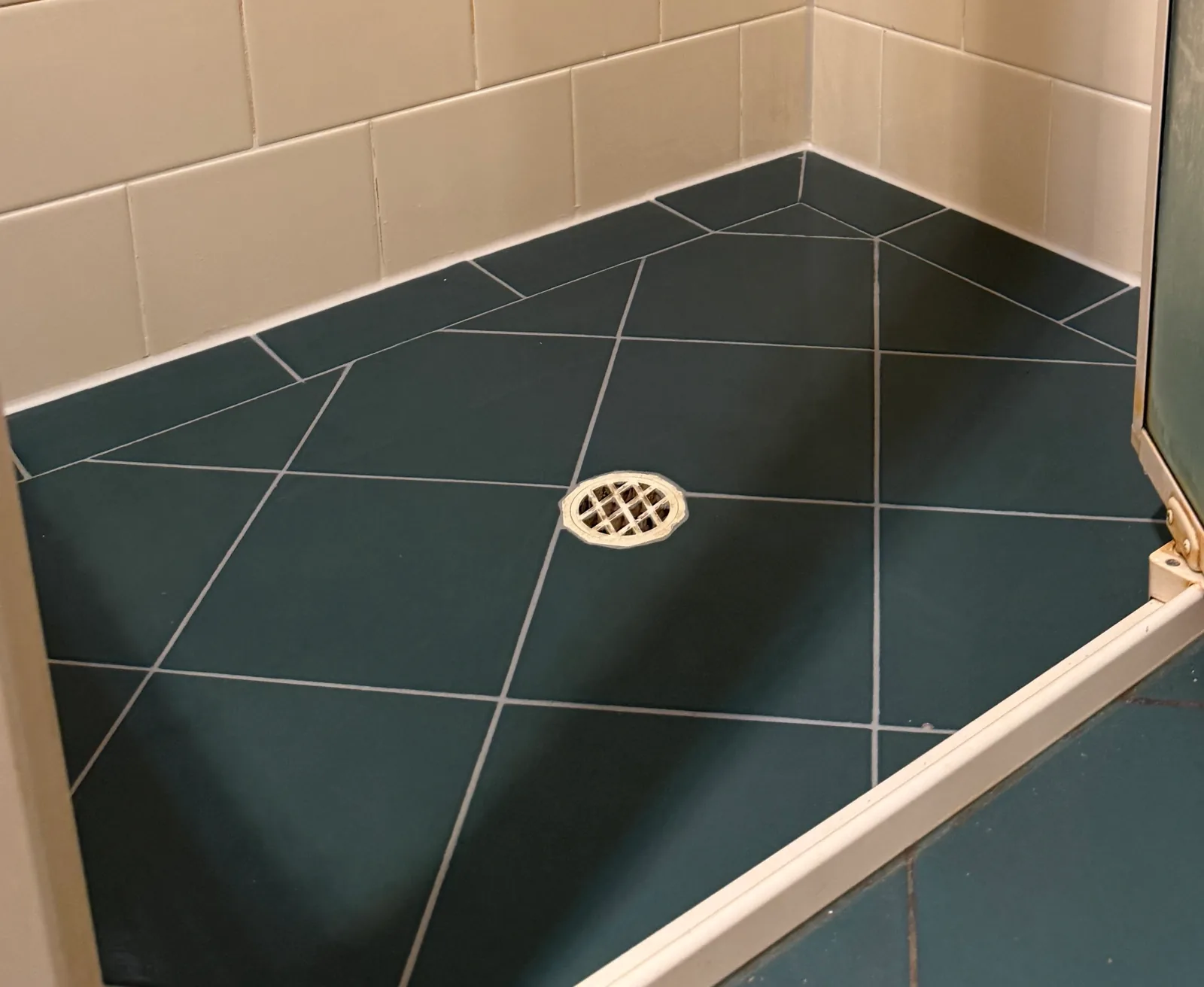
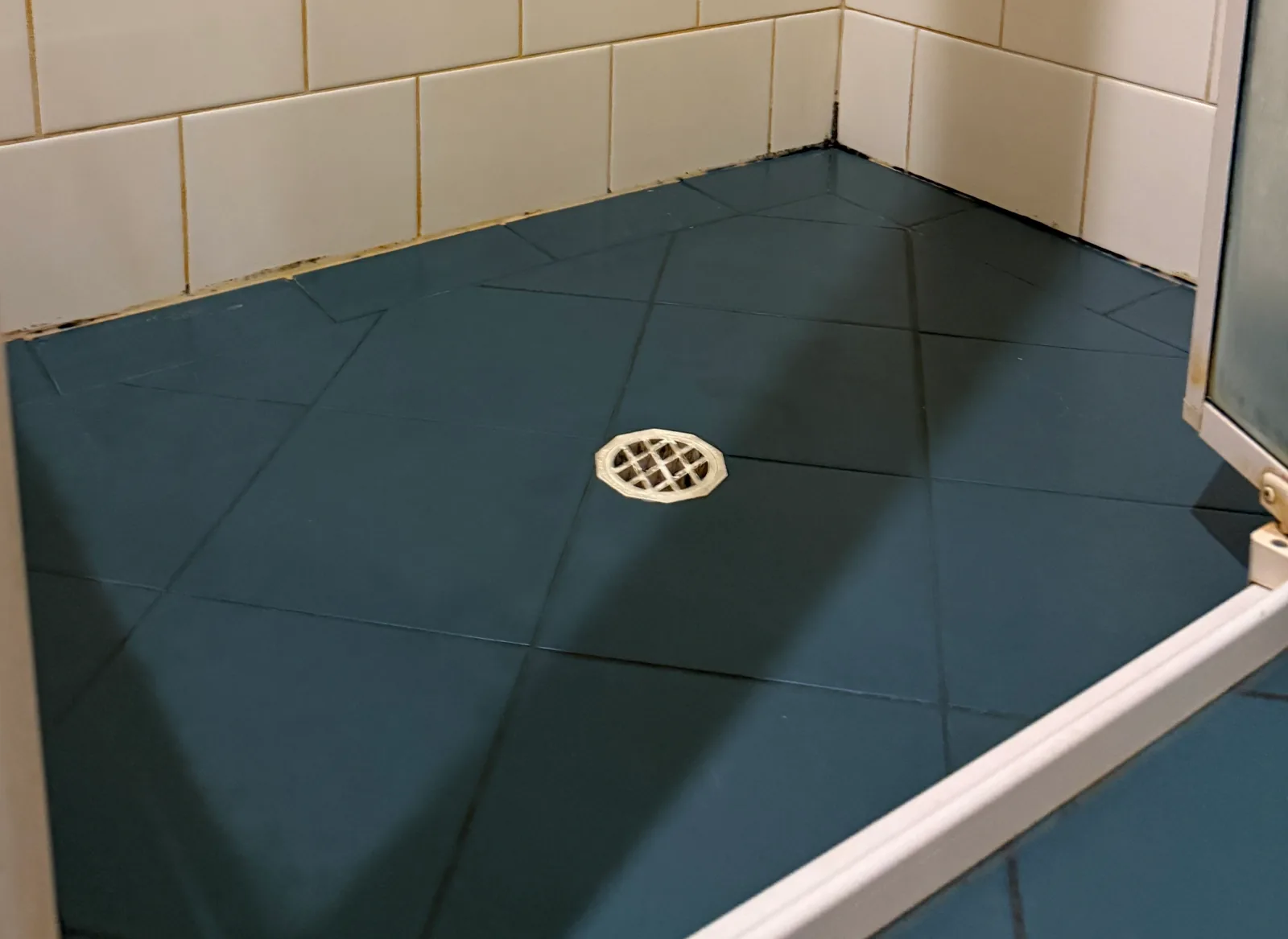
Shower resealing
Renewing the Vulnerable Seals Around Your Shower
A shower contains several junctions where tiles, screens, floors and adjoining surfaces meet. These areas are commonly finished with flexible sealant because they may experience moisture and movement differently from the grout joints between tiles.
Over time, silicone can shrink, split, discolour or pull away from the adjoining surfaces. Shower resealing focuses on assessing these vulnerable areas together and renewing the failed seals within the agreed scope.
Coordinated scope
The exact scope depends on the shower design and condition. STEGZ assesses the visible joints before confirming which treated shower seals should be renewed.
Seal locations
Where Shower Seals Commonly Fail
Every shower is constructed differently. Depending on the design, resealing may involve existing silicone-sealed areas such as:
Not every visible joint should be filled with silicone. STEGZ assesses the shower and renews the seals appropriate to its existing construction.
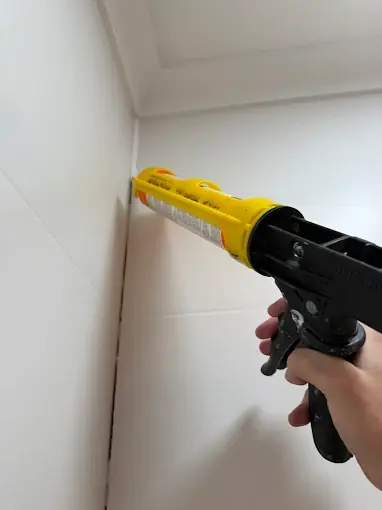
- The shower base perimeter.
- Wall-to-floor junctions.
- Internal corners where flexible sealant is appropriate.
- Shower screen edges.
- Junctions between tiled and adjoining surfaces.
- Other deteriorated wet-area seals included in the agreed scope.
Common warning signs
When Shower Seals Begin to Fail
- Silicone pulling away from tiles or screen surfaces.
- Visible splits, gaps or missing sections.
- Silicone becoming brittle, loose or misshapen.
- Persistent dark staining within ageing seals.
- Mould repeatedly returning within damaged silicone.
- Water escaping around the shower base or screen.
- Several perimeter seals deteriorating at the same time.
- Rough, uneven or repeatedly patched previous repairs.
Water outside the shower can have several causes. Failed seals may be responsible, but grout deterioration, screen alignment, plumbing, waterproofing or construction issues may also need to be considered.
Our process
How STEGZ Reseals a Shower
Inspect the shower perimeter, corners, screen edges and adjoining joints.
Identify which existing seals have failed and confirm the agreed scope.
Remove the deteriorated sealing material rather than covering it.
Clean, sanitise and prepare the exposed joint surfaces.
Apply fresh premium sanitary silicone to the required locations.
Tool and finish the seals carefully by hand.
Inspect the completed work and provide job-specific curing instructions.
Careful preparation
A Clean New Seal Starts Underneath
Fresh silicone is only part of the job. Applying new material over loose, contaminated or deteriorated silicone can leave an uneven finish and reduce adhesion.
STEGZ removes the failed material within the agreed scope, cleans and prepares the adjoining surfaces, and hand-finishes the new silicone to create clean, consistent lines around the treated joints.
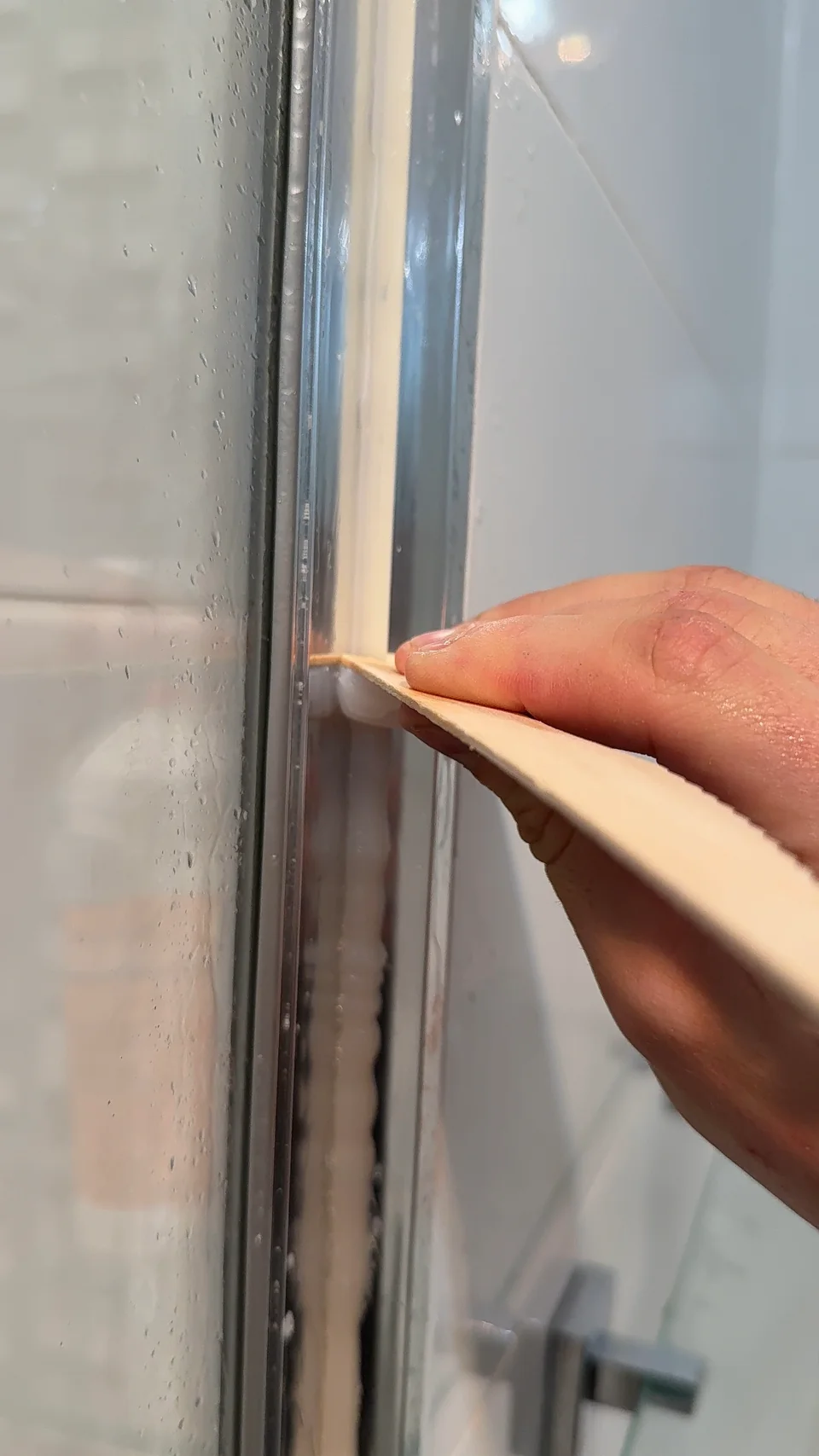
Precision Silicone Application
New silicone is tooled and finished by hand so the treated joints have clean, consistent lines.
Choosing the right repair
Does Your Shower Need Resealing or More?
Resealing may be suitable when:
- The main deterioration is within perimeter or screen seals.
- Several related silicone joints are beginning to fail.
- The surrounding tiles remain secure.
- The grout remains generally serviceable.
- The existing shower can be retained.
- The aim is to renew the failed seals without unnecessary demolition.
A broader restoration may be more appropriate when:
- Grout is cracked, missing or deteriorating.
- The shower floor and lower wall joints also require work.
- The shower base needs coordinated regrouting and resealing.
- Tiles are loose, moving or damaged.
- Water appears to be entering from somewhere beyond the visible seals.
- Waterproofing, plumbing or structural issues may be present.
If the problem is mainly within the visible seals, shower resealing may be enough. If grout joints are cracked or missing, see shower regrouting. If the floor, lower wall joints and perimeter need coordinated work, shower base restoration may be the better fit.
Recent projects
Shower Resealing Results Across Adelaide
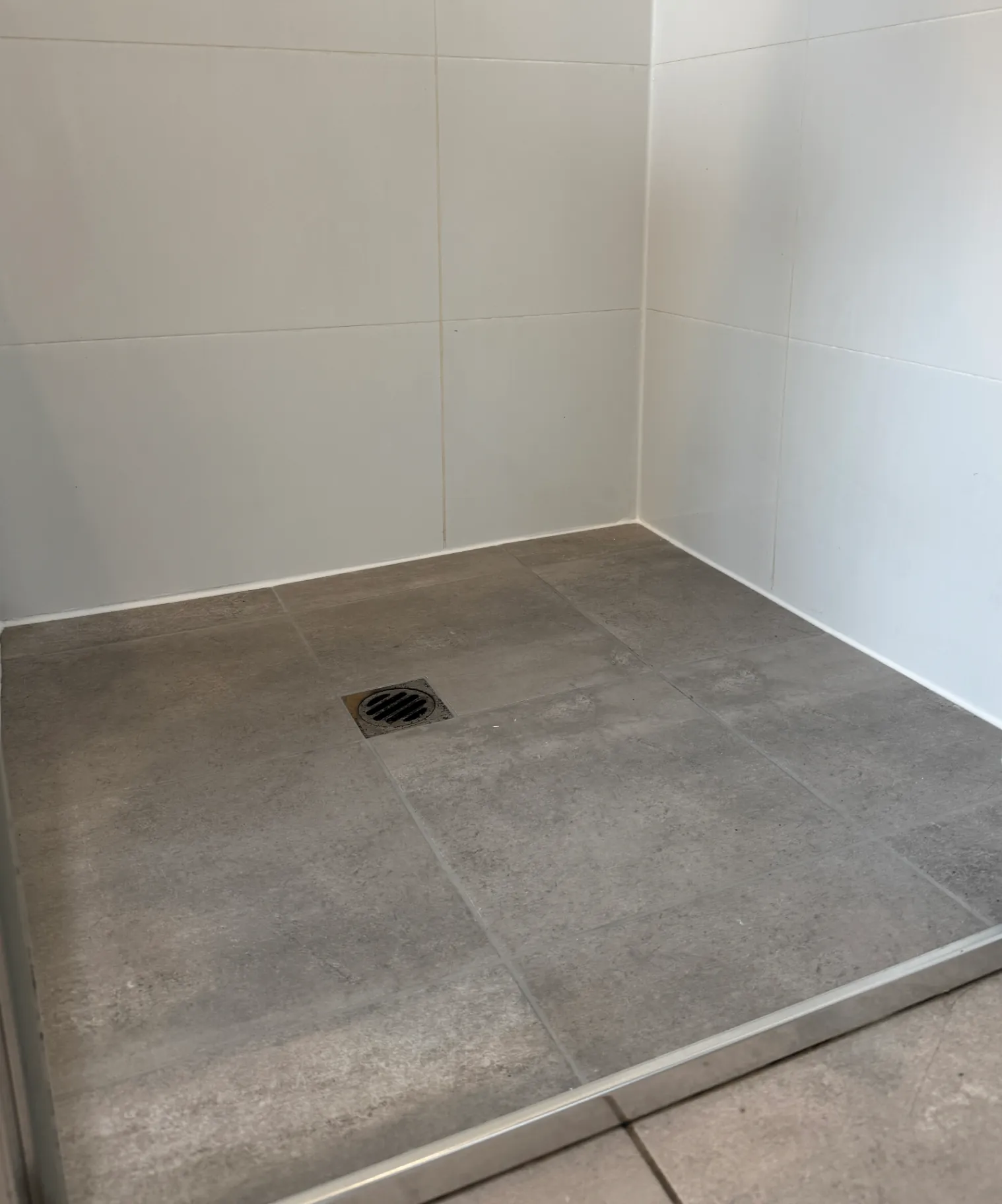
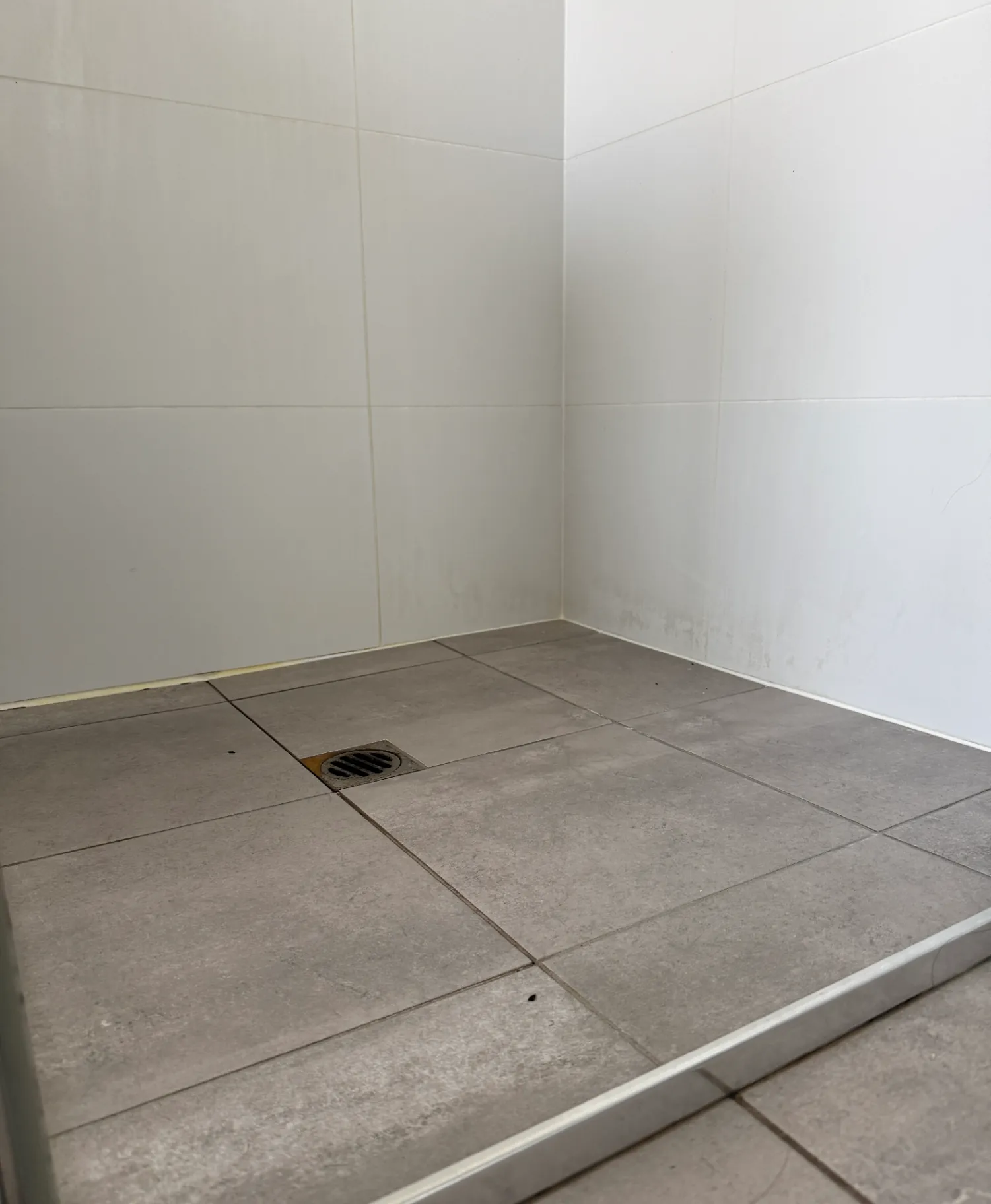
Shower Base Regrout & Reseal - Woodville
Failing silicone around the shower base was renewed as part of a cleaner, more reliable resealing result.
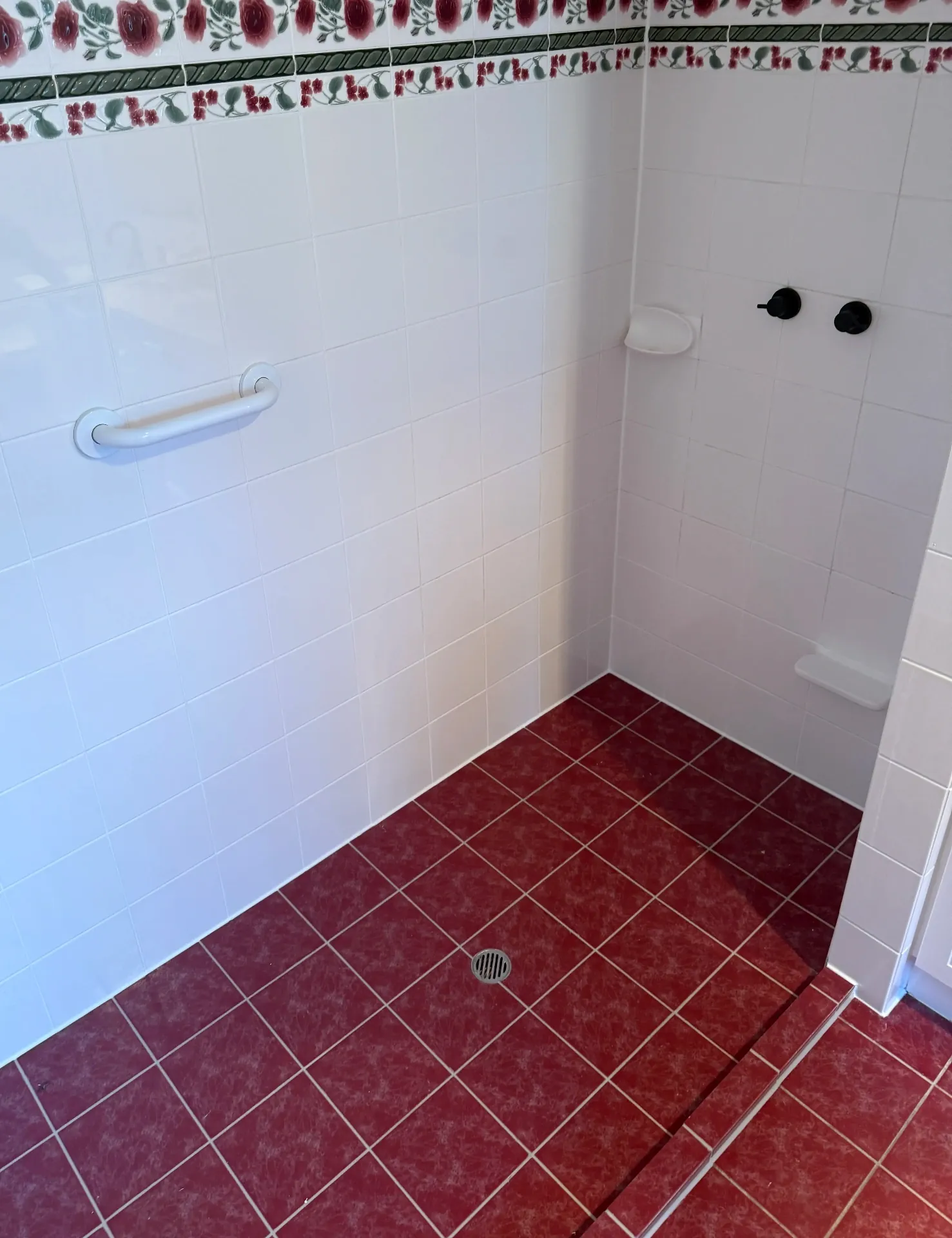
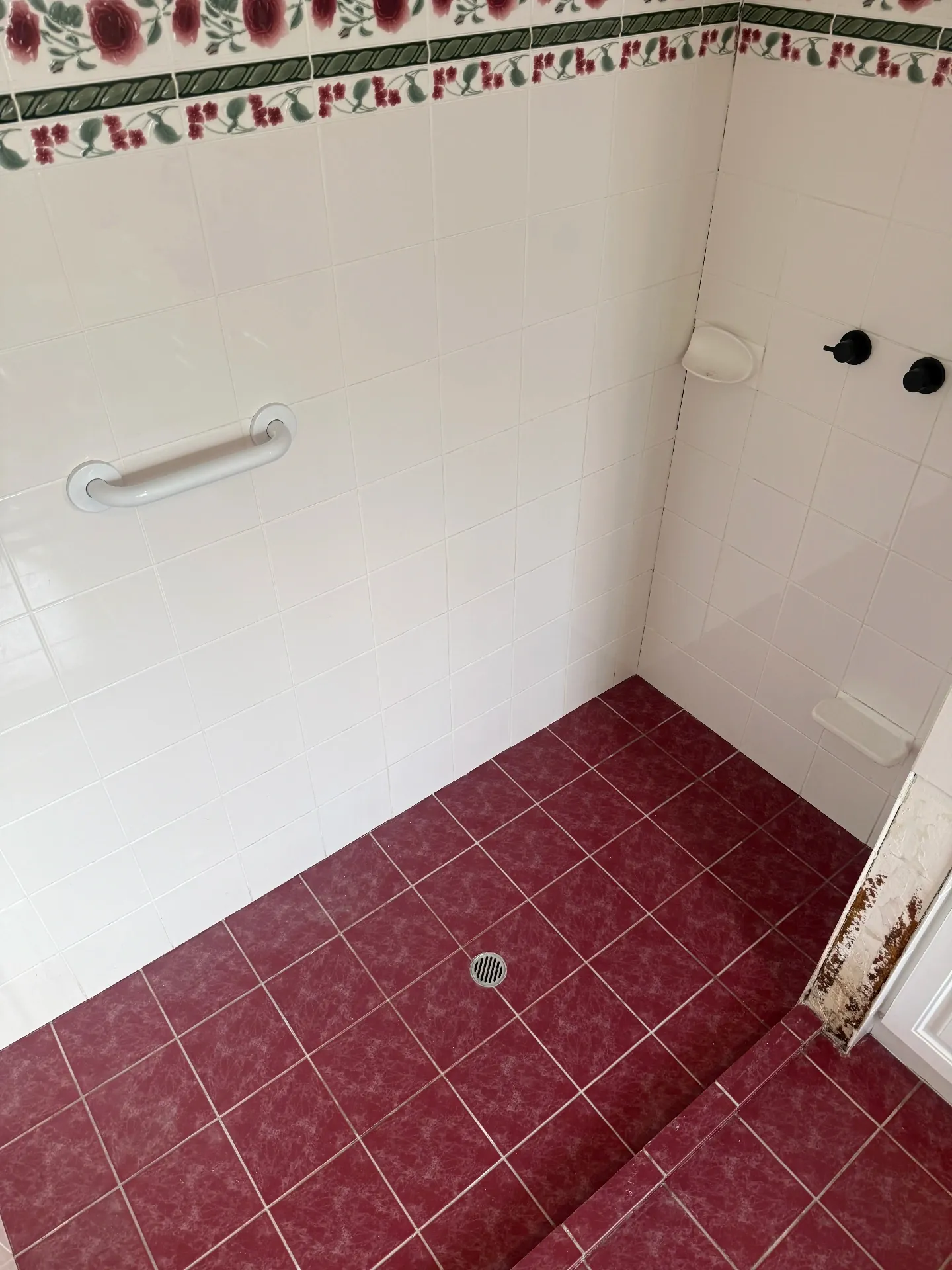
Regrout & Silicone Restoration - West Beach
Cracked and missing silicone was replaced to restore cleaner lines around the treated shower base.
Shower Base Regrout & Reseal - Mitcham
The base and lower wall area were restored before the perimeter was professionally resealed.
Restore what is already there
Renew Failed Seals Without Rebuilding the Shower
Deteriorated shower seals do not automatically mean the tiles or entire shower need to be replaced. Where the surrounding surfaces and underlying construction remain suitable, professional resealing can renew the affected junctions with far less disruption than demolition.
Resealing is not a substitute for repairing failed waterproofing, damaged substrates, loose tiles or concealed plumbing problems. Where these issues are present, a larger repair may be required.
Service area
Shower Resealing Across Adelaide
STEGZ provides shower resealing and wet area restoration across Adelaide’s western, eastern, inner and south-west suburbs.
Not sure whether we cover your area? Send through your suburb and a few clear shower photos and we’ll let you know.
Recent project locations include
Brighton, Clapham, Flagstaff Hill, Kingston Park, Mitcham, Seacliff, West Beach, Willunga and Woodville, along with surrounding suburbs across our service area.
Frequently asked questions
Shower Resealing FAQs
What parts of a shower can be resealed?
Depending on the shower, resealing may include the base perimeter, wall-to-floor junctions, internal corners, shower screen edges and other existing silicone-sealed wet-area joints within the agreed scope.
Is shower resealing the same as silicone replacement?
Silicone replacement describes removing and replacing failed silicone itself. Shower resealing refers to assessing and renewing the relevant collection of seals around the shower as a coordinated service.
Can shower resealing stop water escaping?
Resealing may resolve water escape where failed surface seals are the actual cause. It will not repair failed waterproofing membranes, plumbing leaks or structural problems.
Does every shower joint need to be sealed with silicone?
No. Not every visible joint should be filled with silicone. STEGZ assesses the shower and renews the seals appropriate to its existing construction.
Can a shower be resealed without removing the tiles?
Yes, where the tiles and surrounding surfaces remain suitable, failed sealing material can often be removed and replaced without removing the tiles.
Can STEGZ reseal around shower screens?
Yes. Shower screen edges and adjoining joints can be assessed and resealed where the existing construction and condition make that appropriate.
What happens if the grout is also cracked or missing?
STEGZ may recommend shower regrouting or a broader base restoration where the grout, lower wall joints and perimeter seals need coordinated work.
How do I know whether I need resealing or a shower base restoration?
If the main issue is failed perimeter or screen seals, resealing may be suitable. If the shower floor grout, lower wall joints or base are also deteriorating, base restoration may be more appropriate.
When can the shower be used after resealing?
The required waiting period depends on the products, joint conditions and scope of the job. STEGZ provides job-specific instructions after completion.
Can STEGZ assess the shower from photos?
Yes. Clear photos of the shower base perimeter, corners, screen edges and any water escape can help STEGZ advise whether resealing or broader restoration may be appropriate.
Related services
Other Shower Restoration Services
Shower Regrouting
For cracked, missing, powdering or heavily stained grout between tiles.
Shower Silicone Replacement
For split, peeling, mould-affected or detached silicone that needs to be physically removed and replaced.
Shower Base Restoration
For combined deterioration across the floor grout, lower wall joints and perimeter seals.
Services Overview
Compare the shower restoration services STEGZ offers.
Gallery
Browse before-and-after shower restoration projects.
Contact
Send photos and ask what may be appropriate for your shower.
Photo enquiry
Are Several Shower Seals Starting to Fail?
Send clear photos showing the shower base perimeter, corners, screen edges and any area where water is escaping. STEGZ can review what is visible and help determine whether shower resealing or a broader restoration may be appropriate.